





On Labor Day, the U.S. Flag Code (4 USC §§ 1–10) encourages flying the American flag at full staff — a straightforward tradition that many households and businesses still have questions about. Whether you're hanging a flag from a front-porch bracket, raising it on a full pole, or displaying it indoors at a Labor Day event, the rules are clear and worth knowing before the first Monday of September arrives. Browse the USA Flag Collection to find a flag sized and built for your specific display needs this holiday.
Is Labor Day a Flag-Flying Holiday? The Short Answer
Yes — Labor Day is an official federal holiday, and federal holidays are designated flag-display days under the U.S. Flag Code. That means the flag should be displayed from sunrise to sunset (or illuminated if flown at night) on Labor Day, the first Monday of September each year. Unlike Memorial Day, which has a specific half-staff protocol until noon, Labor Day carries no mandatory half-staff requirement — the flag flies at full staff for the entire day.
This distinction matters because Labor Day falls just two weeks before Patriot Day (September 11), which does require half-staff display. If you want a full breakdown of September 11 protocol, see our dedicated article on Patriot Day flag display and September 11 solemn protocol. Keeping both holidays' rules straight will help you avoid any unintentional errors in the weeks surrounding them.
The History Behind Labor Day and the American Flag
Labor Day became a federal holiday in 1894, signed into law by President Grover Cleveland just days after federal troops suppressed the Pullman Strike — a move widely seen as a concession to organized labor. The holiday was designed to honor the social and economic contributions of American workers, and flag display was always part of its civic fabric from the start.
In the late 19th and early 20th centuries, Labor Day parades were major public events. Union halls and city governments raised American flags alongside labor organization banners, establishing a visual tradition of patriotic display tied specifically to the working class. Over decades, as Labor Day evolved from a union-focused observance into a broader national holiday, the American flag remained the primary symbol flown — representing not just labor rights but the nation that those workers helped build. Today, millions of Americans fly the flag on Labor Day as both a patriotic gesture and a nod to that original working-class heritage.
Full-Staff Rules: Raising and Lowering Your Flag on Labor Day
On Labor Day, the flag is flown at full staff all day — from sunrise to sunset — unless a presidential or gubernatorial proclamation orders otherwise. No standing order requires half-staff on this holiday, though in rare years a separate presidential proclamation (honoring a deceased official or national tragedy) may temporarily change that, so it's always worth checking official communications in the days before the holiday.
 For outdoor pole display, the flag should be hoisted briskly and lowered ceremonially. If you plan to fly the flag after dark, illumination is required under 4 USC § 6(a) — a dedicated flag light or a spotlight angled at the flag satisfies this requirement. Homeowners who prefer a bracket-mounted display on a porch or garage should ensure the flag hangs freely and that the union (the blue canton with stars) is positioned at the peak of the staff when the flag is displayed horizontally. Wind on Labor Day weekend can be significant in many parts of the country, so a flag built for outdoor endurance is a practical necessity. The USA Outdoor Flag is specifically constructed for pole and bracket mounting with reinforced headers and UV-resistant nylon or polyester, typically offering a lifespan of 6 months to 2 years depending on local wind and sun exposure.
For guidance on who issues half-staff orders and how those chains of authority work more broadly, our article on half-staff rules: who decides and when covers federal, gubernatorial, and municipal levels in detail. That knowledge is especially useful in the fall, when Patriot Day, Columbus Day, and Veterans Day all fall within a short window and each carries its own protocol.
Correct Flag Orientation and Positioning for Labor Day Displays
Proper orientation of the American flag is the same on Labor Day as on any other holiday — the union (blue field of stars) must always be in the uppermost and leftmost position from the observer's perspective. Specifics vary by display type, but the core rule never changes.
- Vertical pole display: Union at the top, flag hangs freely.
- Flat horizontal wall mount: Union in the upper left from the viewer's perspective.
- Flat vertical wall mount: Union in the upper left — this means the stars will be at top-left when the flag is oriented with stripes running vertically.
- Window display (from inside looking out): Union should appear in the upper left to observers outside the building.
- Crossing with another flag: The U.S. flag should always be on the flag's own right (observer's left), and its staff should be in front of the other flag's staff.
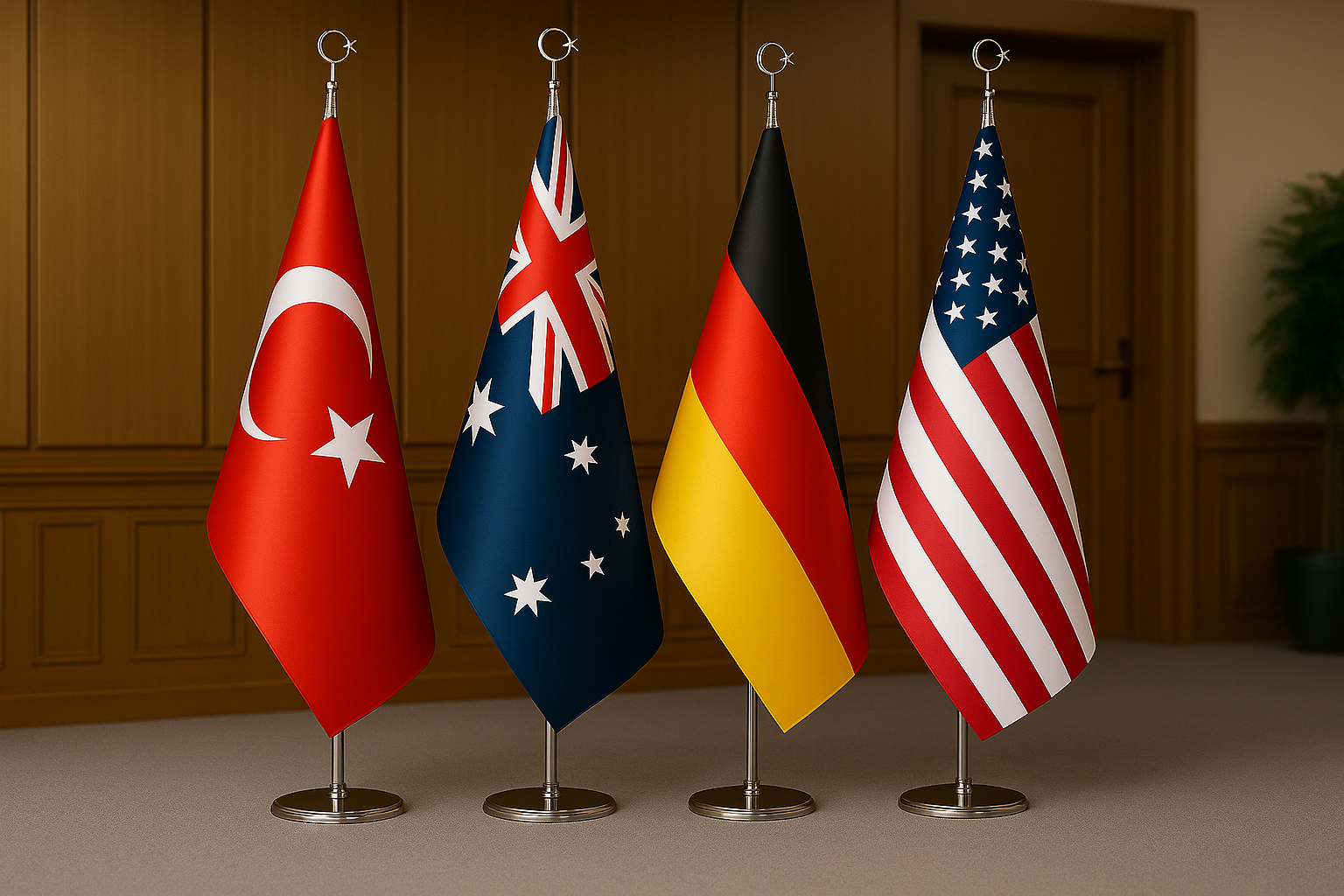
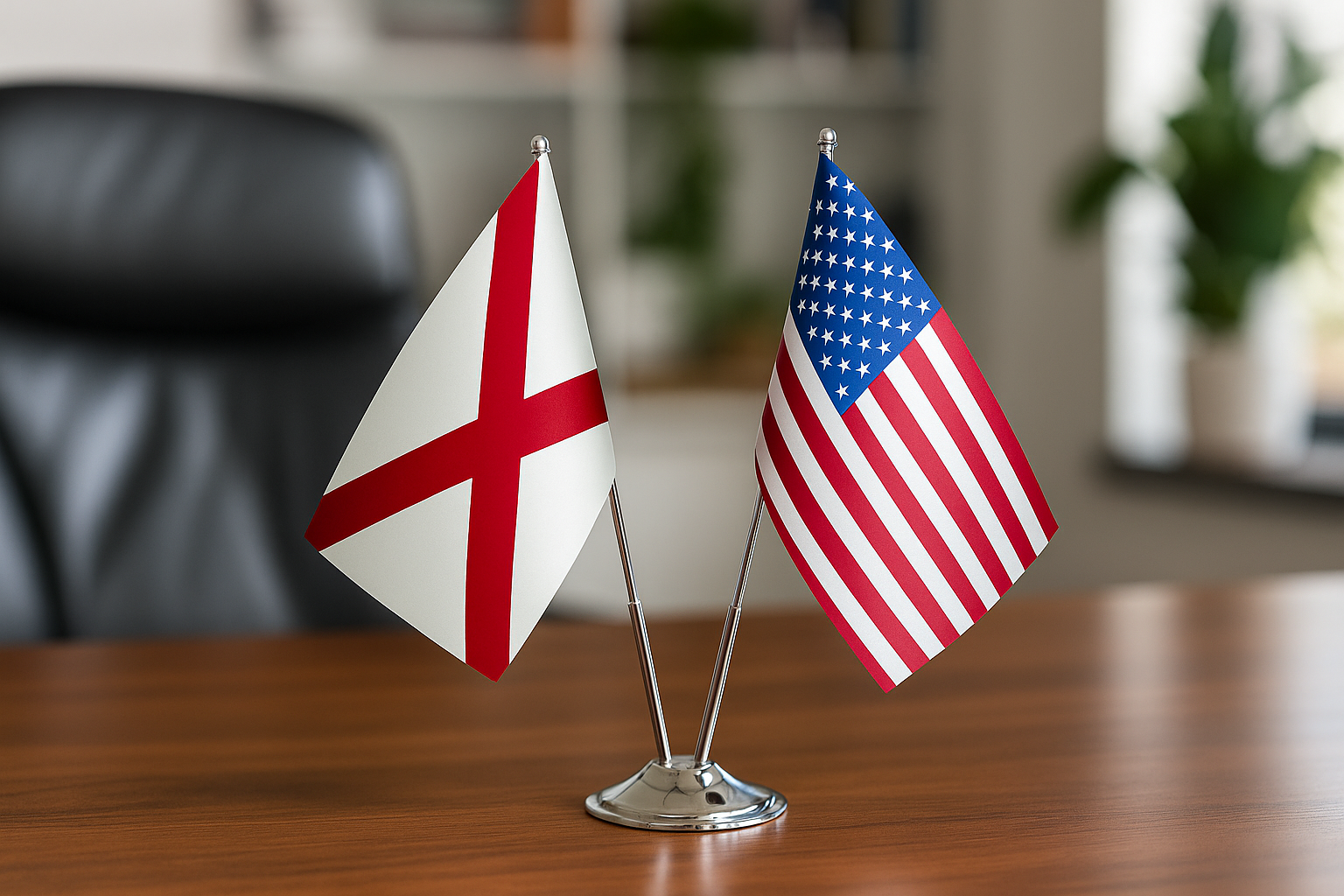
A common Labor Day scenario involves displaying multiple flags — a state flag, a company flag, or a city flag alongside the national flag. Under 4 USC § 7, no flag should be placed on the same level or above the U.S. flag on the same staff or halyard. If separate staffs are used, all flags should be at the same height, with the U.S. flag given the position of honor (to its own right). For a comprehensive look at proper flagpole etiquette, our flagpole etiquette and display rules guide covers multi-flag arrangements, bracketed mounting, and indoor display scenarios.
Choosing the Right Flag Size for Labor Day
Flag size should be proportional to the display structure — a flag that is too large for its pole looks unkempt and is more likely to sustain wind damage, while one that is too small appears insignificant. Standard ratios and size pairings are worth knowing before you purchase.
The most common residential flagpole sizes in the United States range from 15 ft to 25 ft (4.6 m to 7.6 m) in height. As a general guideline, the flag's fly length (the horizontal dimension) should be roughly one-quarter of the pole's height. That gives you these practical pairings:
- 15 ft (4.6 m) pole: 2.5 ft × 4 ft (0.76 m × 1.2 m) flag
- 20 ft (6 m) pole: 3 ft × 5 ft (0.9 m × 1.5 m) flag — the most popular residential size
- 25 ft (7.6 m) pole: 4 ft × 6 ft (1.2 m × 1.8 m) flag
- 40 ft (12.2 m) pole: 6 ft × 10 ft (1.8 m × 3 m) flag — common for commercial properties
For wall brackets, most standard residential brackets accommodate a 2 ft × 3 ft (0.6 m × 0.9 m) or 3 ft × 5 ft flag. If you're unsure which size fits your setup, our detailed reference on US flag sizes explained in inches and feet provides a full sizing chart with pole height correlations and material recommendations for each size range.

USA Flag Collection
A full range of American flags in every size and material — built for outdoor endurance, indoor ceremony, and everything in between.
Browse Collection →Flag Care Before, During, and After Labor Day Weekend
Labor Day weekend is one of the last major outdoor holidays of the summer, which makes it an ideal time to inspect your flag before autumn weather arrives. A flag that has flown all summer is likely showing UV fading, fraying at the fly end, or wear at the header — any of which can worsen rapidly in fall wind.
Before raising your flag on Labor Day, inspect it for: fraying at the fly hem (the end opposite the header), fading of the red stripes or blue canton, tears, or loose stitching at the grommets. A flag showing significant fraying or color loss should be retired rather than displayed — displaying a visibly worn flag is actually contrary to the spirit of 4 USC § 8(k), which states that the flag should not be displayed in a condition that disrespects it. After the holiday, store the flag properly: fold it in the traditional tri-corner method, place it in a breathable cloth bag, and keep it in a cool, dry location away from direct sunlight. If your flag is beyond use, our guide on flag retirement and disposing of a worn flag walks through the dignified disposal process, including VFW drop-off programs and official burning ceremonies.
Labor Day Flag Etiquette for Businesses and Organizations
Businesses, schools, and civic organizations have essentially the same obligations as private citizens under the Flag Code, though many also operate under local ordinances or internal policies that may add specific requirements. The most important practical point: on Labor Day, flags at commercial properties should fly at full staff, not half-staff, unless a specific proclamation dictates otherwise.
For organizations that fly multiple flags — national, state, and corporate — the display order matters. The U.S. flag must occupy the position of highest honor: on its own right when standing behind the flags facing the audience, or centered and highest when flags are arranged in a fan or semicircle. Corporate or organizational flags should never be flown at the same height as or above the national flag. If a business regularly displays flags on Labor Day as part of a larger seasonal campaign, it's worth investing in commercial-grade flags rated for 80% or better UV resistance with reinforced canvas headers — these can survive 9 to 14 months of continuous outdoor exposure in typical mid-latitude U.S. climates, compared to 3 to 6 months for standard-grade flags.
Is the flag flown at half-staff on Labor Day? +
What time should I raise and lower the flag on Labor Day? +
Can I fly a state flag or union flag alongside the American flag on Labor Day? +
What size flag should I use for Labor Day on a 20 ft flagpole? +
Is it disrespectful to leave the flag out overnight on Labor Day? +
Can I display a worn or faded flag on Labor Day? +
What material is best for a Labor Day flag that will also be used through fall? +
Labor Day is one of the easiest federal holidays to observe correctly — the flag flies at full staff, standard display rules apply, and no special half-staff timing is required. The most important things to get right are proper orientation, appropriate sizing for your pole or bracket, and making sure your flag is in good enough condition to represent the day with dignity. If you're replacing a worn summer flag or adding a new display for the holiday, the USA Flag Collection offers outdoor-rated flags in every standard residential and commercial size. For a flag built specifically for pole and bracket mounting with reinforced construction and UV-resistant fabric, the USA Outdoor Flag is a practical choice that will carry you through Labor Day and well into the fall holiday season. Bulk pricing is available for corporate and organizational orders — contact us directly to discuss volume requirements for multi-location businesses or civic organizations.


