





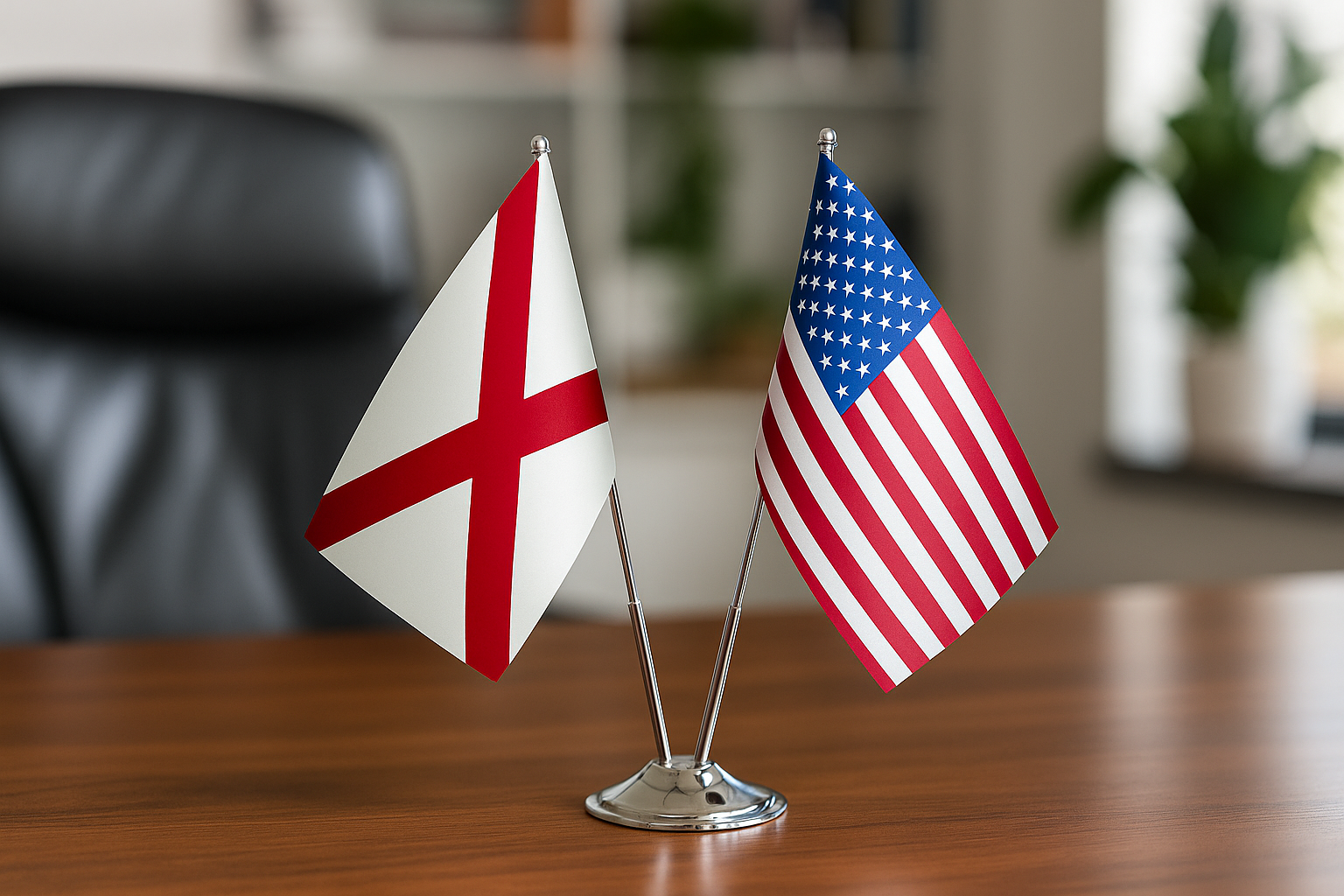




The right indoor flagpole set combines a pole height matched to your ceiling and a base heavy enough to keep the assembly stable — get either wrong and the display looks unprofessional or, worse, tips over. For offices, courtrooms, schools, churches, and government buildings across the United States, our Indoor Flags collection covers both the flags and the hardware needed to present them correctly. This guide walks you through choosing the right pole height, counting the poles you actually need, planning your layout, budgeting for hardware and flags together, and ordering on a timeline that keeps you ready for any ceremony.
Choosing the Right Pole Height and Flag Size for Your Venue
For most US indoor venues, a pole height of 8 ft (2.44 m) paired with a 3 ft × 5 ft (0.91 m × 1.52 m) flag is the standard starting point; rooms with ceilings above 10 ft (3.05 m) call for a 9 ft (2.74 m) or 9.5 ft (2.90 m) pole with a 4 ft × 6 ft (1.22 m × 1.83 m) flag. Indoor flagpole sets are not one-size-fits-all — the proportion between pole length and flag size is what makes a display look intentional rather than improvised.
The US Flag Code (4 USC §§ 1–10) does not mandate a specific indoor pole height, but it does require that the flag be displayed with dignity and that it not touch the floor or any object beneath it. As a practical rule, allow at least 12 in (30 cm) of clearance between the bottom hem of the flag and the floor. A 3 ft × 5 ft flag hangs approximately 60 in (152 cm) below the finial; on an 8 ft (2.44 m) pole the hem clears the floor by roughly 36 in (91 cm) — well within safe limits. Stepping up to a 4 ft × 6 ft flag on an 8 ft pole, however, puts the hem dangerously close to the ground, which is why pole height and flag dimensions must be selected together.
Ceilings lower than 8 ft (2.44 m) — common in older courthouses or small meeting rooms — are best served by 7 ft (2.13 m) poles with 2.5 ft × 4 ft (0.76 m × 1.22 m) flags. Grand ceremonial halls with ceilings at 14 ft (4.27 m) or higher can accommodate 10 ft (3.05 m) poles and 5 ft × 8 ft (1.52 m × 2.44 m) flags, which project the visual authority those spaces demand. Always measure the clear height from finished floor to the lowest ceiling obstruction — light fixtures, sprinkler heads, and HVAC vents all reduce usable height.
 The USA Official Indoor Flag is sized specifically for indoor ceremonial use — woven from heavyweight nylon or poly-blend fabric with the structure to drape cleanly on an indoor pole rather than collapsing flat against it. Indoor ceremonial flags differ from outdoor flags in several important ways: they typically carry gold fringe, feature heavier fabric (often two-ply polyester or rayon), and include a pole sleeve or heading reinforced for repeated mounting and dismounting. Because indoor flags are not exposed to UV radiation or wind stress the way outdoor flags are, the lifespan factors that shorten an outdoor flag's useful life apply differently — for a detailed breakdown, see our guide on when to replace an indoor flag. Selecting a quality flag at the outset is an investment in appearance; a limp or faded flag on an otherwise correct pole undermines the entire display.
How Many Indoor Flagpole Sets Does Your Space Actually Need
Most US government offices, courtrooms, and formal meeting rooms display two poles minimum — the US flag and one additional flag (state, branch of service, or organizational). Three-pole arrangements are standard in congressional hearing rooms, military headquarters, and executive suites, where the US flag is flanked by a service flag and a command or state flag.
The FIAV (Fédération internationale des associations vexillologiques) recommends that when multiple flags are displayed in a group, they be mounted at equal heights with equal-sized flags to signal parity of respect. A practical guideline used by many federal agencies is one pole per 150–200 sq ft (14–19 sq m) of formal display area, though this scales down quickly for smaller spaces. Schools most commonly use two sets per classroom — one for the US flag beside the board and occasionally a state or school flag at the entrance. Houses of worship typically use two sets flanking an altar or lectern. If your space is a funeral home or memorial chapel, the protocol is more specific; our dedicated guide on indoor ceremonial flag sets for funeral and memorial settings covers those requirements in full detail.
Layout and Setup: Position, Angle, and Base Placement
Under US Flag Code protocol, when the US flag is displayed indoors alongside other flags, it must occupy the position of honor — to its own right (the observer's left) when facing the audience, or centered and forward of other flags in a curved arrangement. Getting layout wrong — even with perfect hardware — signals a lack of care that trained visitors will notice immediately.
Indoor flagpoles are typically displayed at a slight outward angle of 15–20 degrees from vertical, achieved either through a wall bracket attached near the upper third of the pole or through a weighted base with an angled socket. The angled presentation allows the flag to unfurl away from the pole and remain visible even in still air. For ceremonial indoor environments where the flag must hang fully vertical — courtrooms, for example — a straighter stance with a heavier drape fabric is preferred.
Base placement matters more than most buyers anticipate. A base on hardwood, marble, or polished tile must have non-slip rubber feet or a weighted sand-fill option to prevent any movement during high-traffic events. Carpet provides natural grip, but thicker pile can cause a lighter base to rock. Our Bases & Stands collection includes options ranging from cast-iron weighted bases for heavy ceremonial use to parade-style bases for temporary event deployments. For broader context on base types and their appropriate applications, our article on flagpole base types covers the trade-offs in detail. Minimum recommended base weight for an 8 ft (2.44 m) indoor pole is 7–10 lbs (3.2–4.5 kg); taller poles require proportionally heavier bases, with 9–9.5 ft poles ideally ballasted at 12–15 lbs (5.4–6.8 kg) or secured with a floor sleeve insert.

Indoor Flags Collection
Complete ceremonial indoor flag sets — poles, bases, finials, and flags — sized for standard and high-ceiling US venues.
Browse Collection →Budget Planning: What Drives the Cost of an Indoor Flagpole Set
An indoor flagpole set's total cost is determined by three main variables: pole material and diameter, base weight and material, and flag fabric grade — and these three choices interact in ways that can push the overall investment significantly up or down. Understanding what drives cost helps you allocate sensibly rather than overspending on hardware while underinvesting in the flag itself, or vice versa.
Pole material is the largest single cost driver. Aluminum poles are lighter and less expensive; solid brass and gold-tone anodized poles carry a premium because of the material weight and the machining required to finish them to a ceremonial standard. Diameter matters too — a 1-inch (25 mm) pole is standard for most indoor sets, while 1.25-inch (32 mm) poles are used in formal government settings where visual mass matters. Finials (the ornament at the top of the pole) range from simple gold ball styles to eagle finials, which are the most common choice for US government display per longstanding convention; eagle finials add to the cost but are essentially mandatory for formal federal and judicial settings.
Flag fabric grade is the second major cost driver. A two-ply rayon flag with sewn stripes and embroidered stars costs more to produce than a single-ply printed flag, but it drapes and presents dramatically better under indoor lighting — which is why ceremonial environments almost always specify the heavier fabric. Base weight is the third driver: cast-iron and marble bases cost more than plastic sand-fill bases but eliminate wobble risk entirely, which matters in high-traffic spaces. When planning a multi-pole purchase for a government office or organization, buying sets rather than individual components typically reduces per-unit cost, and bulk pricing is available for corporate and institutional orders.
Timing: When to Order Your Indoor Flagpole Set
Order indoor flagpole sets at least 2–3 weeks before they are needed for any formal event, and 4–6 weeks ahead for custom or large-quantity orders. Leaving flag procurement to the final days before an opening ceremony, audit inspection, or state visit is a common and avoidable mistake.
The busiest ordering periods for indoor ceremonial flags in the US cluster around federal holidays — particularly Memorial Day, Flag Day (June 14), Independence Day, and Veterans Day — as well as government fiscal year transitions in September and October, when new offices are being furnished. School and university orders spike in August ahead of the academic year. Ordering outside these peak windows typically means faster fulfillment and more flexibility on configuration choices.
If your organization operates on an annual replacement or inspection schedule for ceremonial flags — a practice recommended for high-visibility venues — build the order timeline into your annual facilities calendar rather than reacting to visible wear. For guidance on flagpole display etiquette that applies once your set is installed, our article on flagpole etiquette and display rules is a useful reference, covering positioning protocol, half-staff procedures adapted for indoor use, and multi-flag arrangements in formal settings. If you are also determining the correct flag size relative to pole height for a specific flag design, our guide on how tall a flagpole should be provides a sizing framework applicable to both indoor and outdoor installations.
What is the standard height for an indoor flagpole set in a US office? +
What type of base is best for an indoor flagpole on a hard floor? +
Does the US Flag Code specify a required indoor flagpole height? +
How many indoor flagpole sets does a typical government office need? +
What angle should an indoor flagpole be displayed at? +
How far in advance should I order an indoor flagpole set? +
What is the correct position for the US flag in an indoor multi-flag display? +
What drives the cost difference between indoor flagpole set options? +
Selecting the right indoor flagpole set is a combination of precise measurement, protocol awareness, and material choices matched to how the space is actually used. Start with your ceiling height, choose the pole and flag dimensions that keep the hem well clear of the floor, then select a base weighted appropriately for your floor surface. Browse the complete Indoor Flags collection for flags matched to indoor pole dimensions, and explore the Bases & Stands collection for the hardware side of the equation. The USA Official Indoor Flag is an excellent starting point for any formal US venue — available in the sizes most commonly paired with 8 ft and 9 ft indoor sets. Bulk pricing is available for corporate, government, and institutional orders — contact us directly to discuss quantity requirements and configuration options.


