
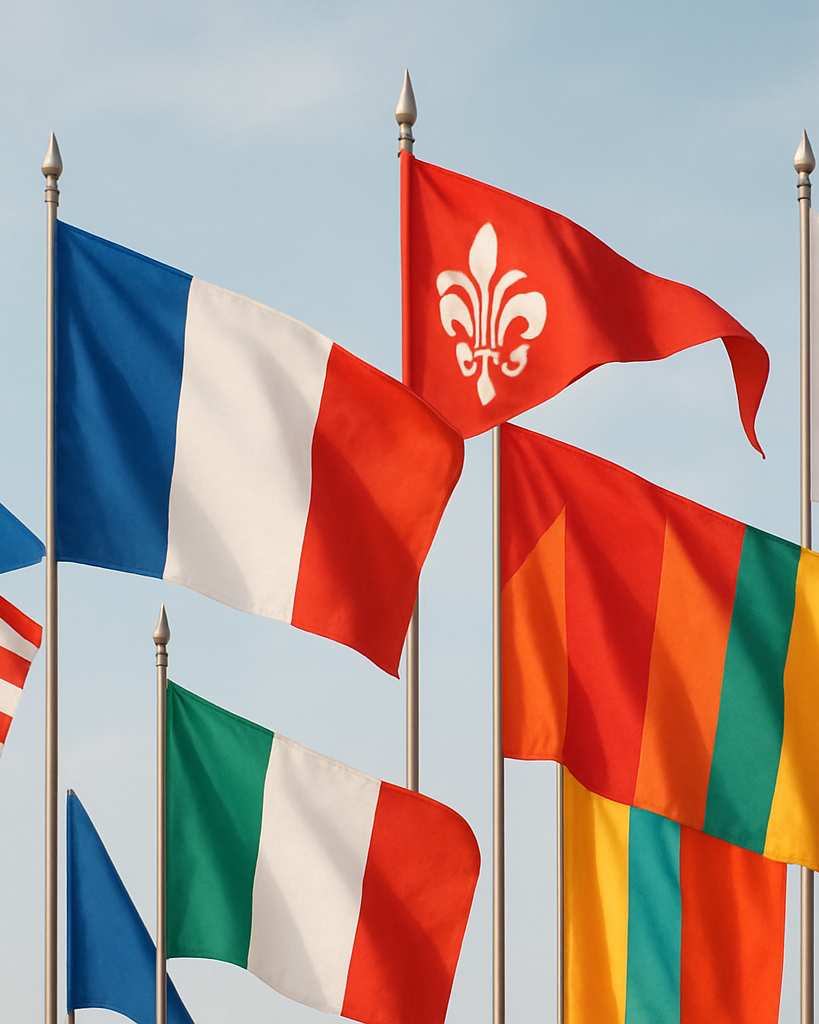
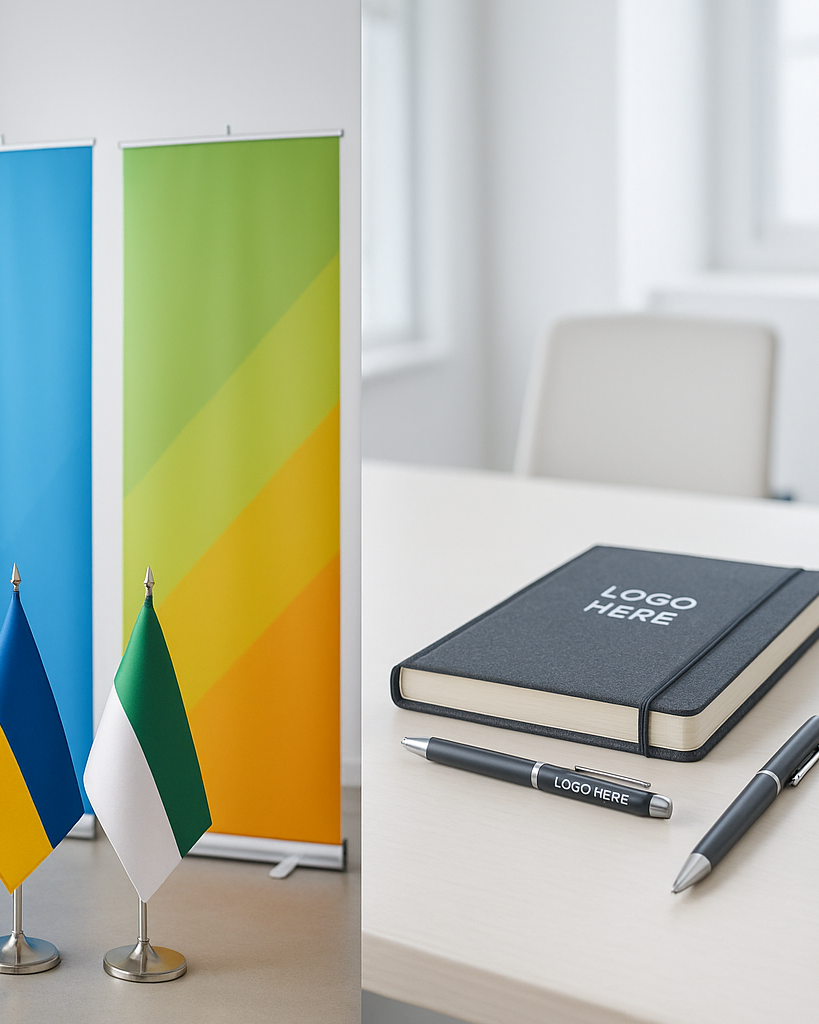
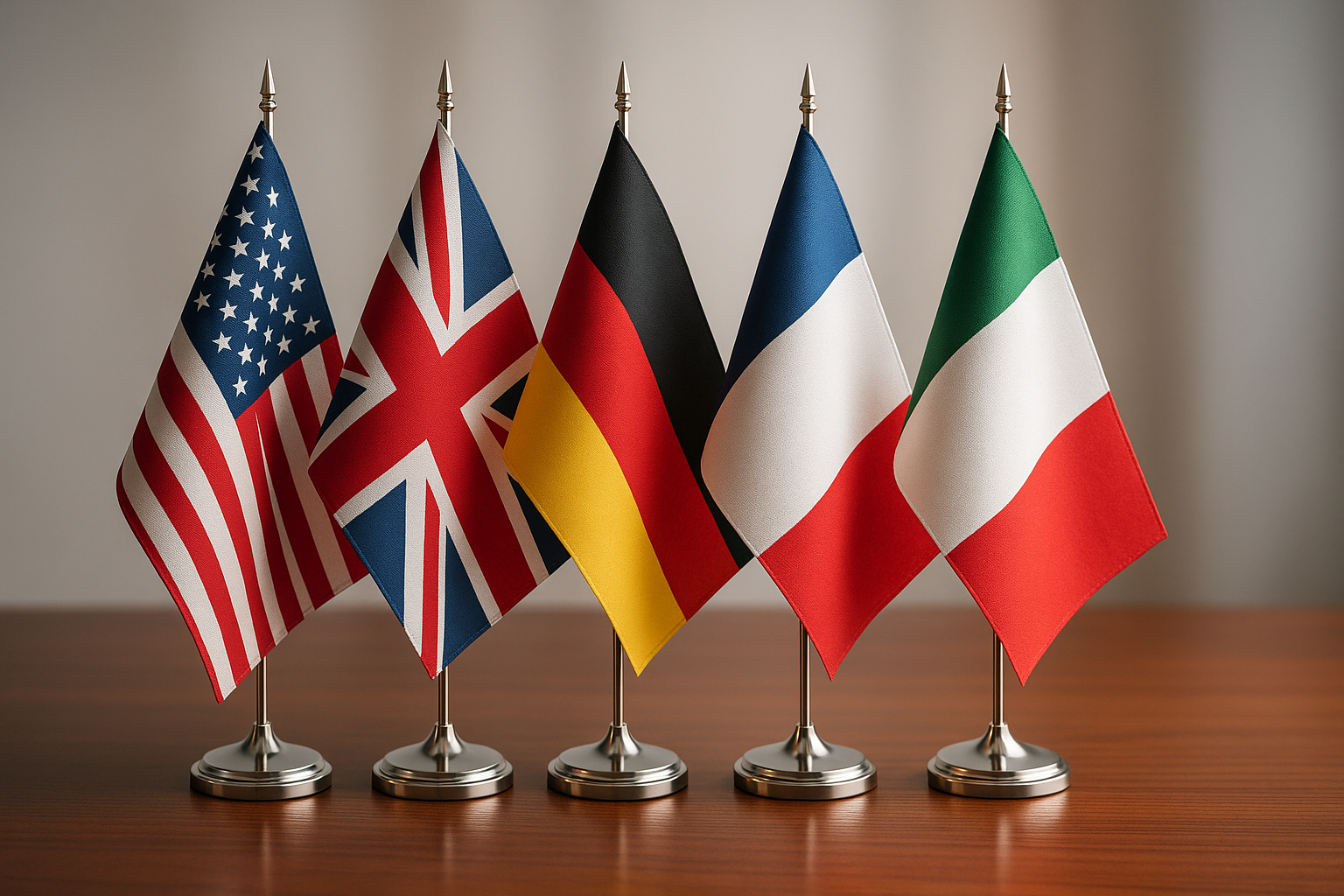
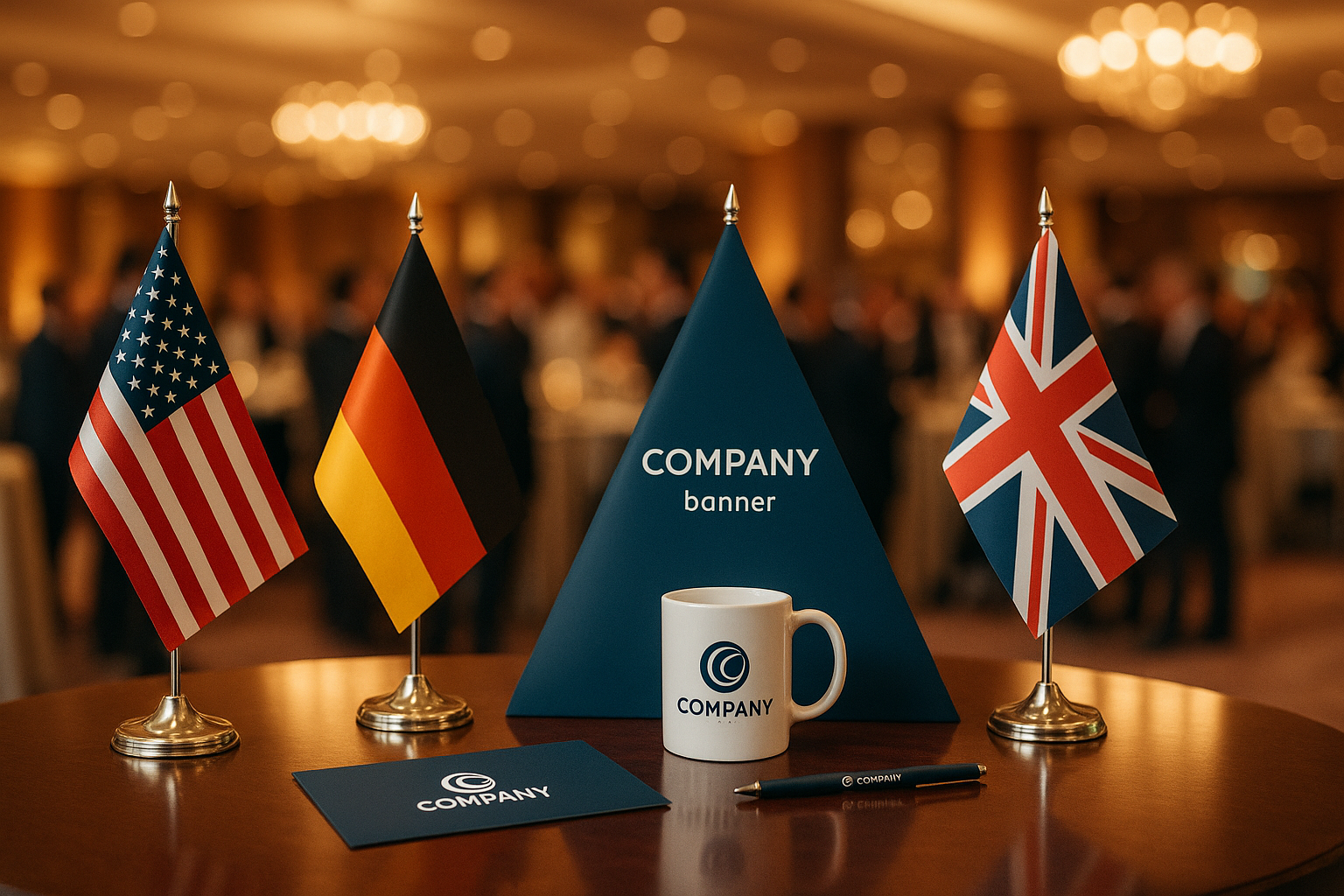

A corporate flag program is a structured, multi-location deployment of branded flags — logo pole flags, USA and state flags, and custom display flags — that turns every building entrance, trade show booth, and campus into a consistent brand statement. The right program starts with identifying the correct flag types for your venues, then calculating quantities, planning layouts, and timing your order to avoid production delays. Explore the full range of options in the Corporate Flags collection to understand which products fit each deployment scenario before you build your program.
Choosing the Right Flag Types for Corporate Use
The best corporate flag programs use a mix of outdoor pole flags for building exteriors and high-traffic entrances, and indoor display sets for lobbies, boardrooms, and reception areas. Selecting the correct product type first prevents the most common and costly mistake: ordering flags that are the wrong format for their intended location.
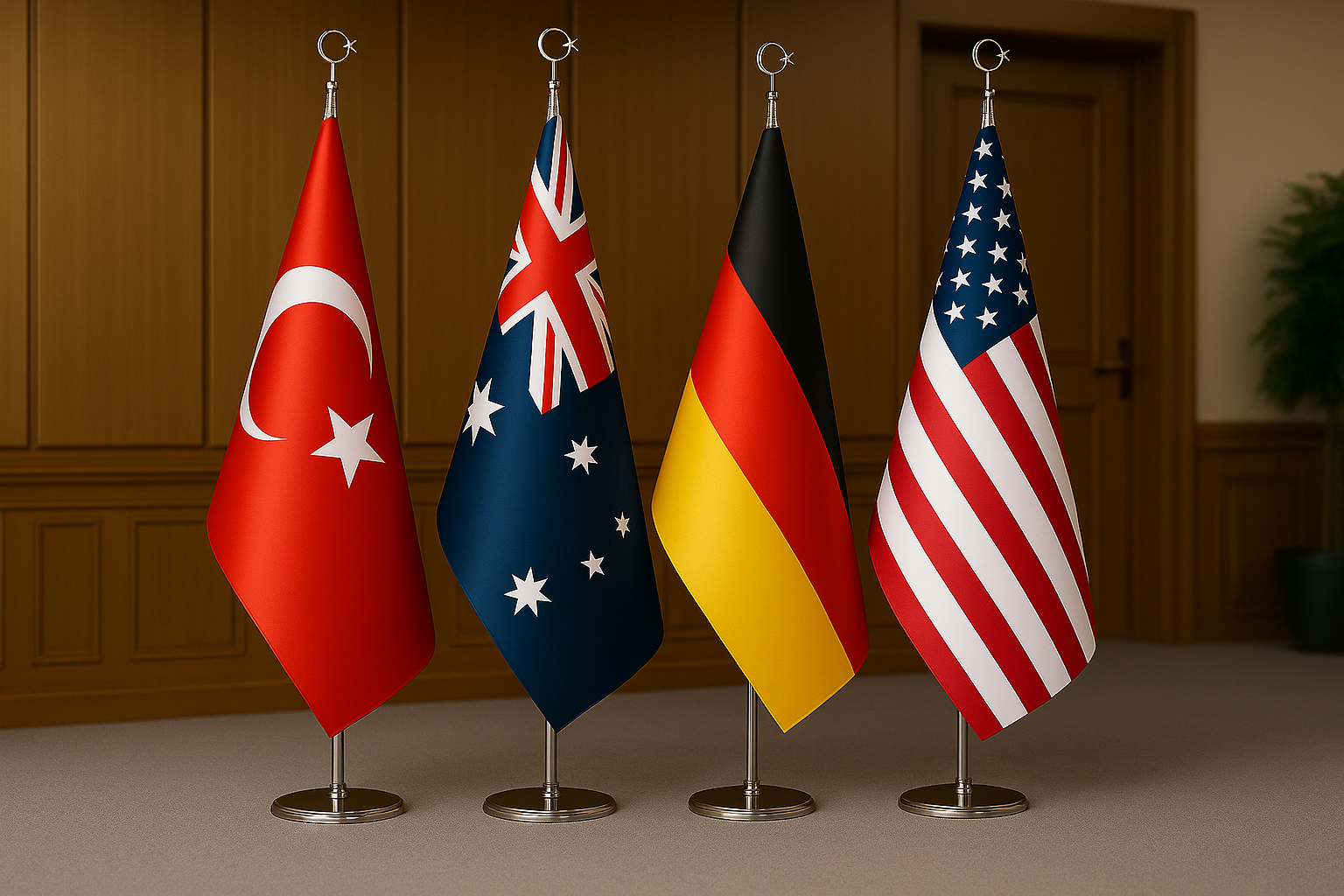
Outdoor environments demand flags printed on 150-denier or 200-denier polyester with UV-resistant inks rated to resist fading for 6 months to 2 years under direct sunlight, depending on climate. For corporate headquarters, industrial campuses, and retail chains, Logo Printed Outdoor Pole Flags are the industry standard — they carry your logo on a feather, teardrop, or rectangular format and are engineered to withstand wind, rain, and prolonged outdoor exposure. Indoor sets follow a different standard: they use heavier decorative fabrics, fringe borders, and floor-standing bases designed for stationary display in controlled environments.
Trade show and event deployments add a third category. Pop-up feather flags and retractable banner stands are lightweight, easy to transport, and set up in under three minutes, making them ideal for expos, product launches, and sponsorship activations. If your program spans both permanent installations and event use, plan for two separate flag specifications from the outset — the hardware, materials, and print methods differ significantly between the two use cases.
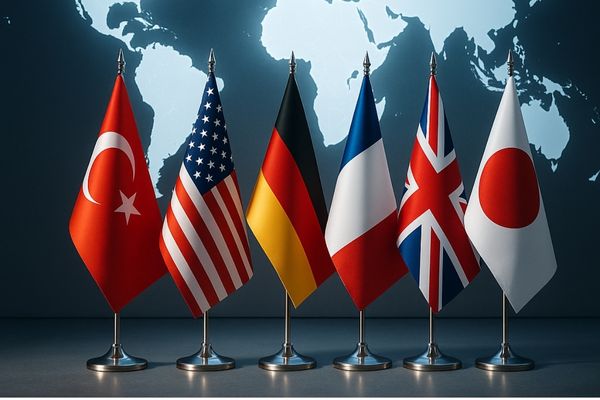
For companies with international offices or multicultural workplaces, country flags are often part of the program. That topic — including protocol for displaying national flags alongside corporate flags — is covered in detail in the indoor flag sets protocol guide, which is worth reading before finalizing your indoor display specifications.
How Many Flags Your Program Actually Needs
Most corporate programs underestimate flag quantities by 20–40% because they only count primary display locations and forget replacement stock, seasonal spares, and new-location growth. A practical formula: count your active display positions, multiply by 1.5, and round up to the next bulk pricing tier.
For outdoor pole flags, each flagpole typically flies one flag at a time, but a well-managed program keeps a minimum of one spare per pole on hand. Flags exposed to full sun and wind in southern or coastal climates may need replacement every 6 to 9 months; in mild northern climates, the same flag can last 18 to 24 months. Factor your climate zone into your annual quantity calculation rather than ordering reactively when a flag visibly degrades.
Corporate campuses with multiple buildings should treat each entrance as a separate display position. A headquarters with a main entrance, a parking structure entrance, and a visitor center entrance needs three outdoor flags minimum — plus spares. Retail chains operating 50 or more locations should establish a centralized flag inventory managed by facilities or marketing operations, with reorder triggers set at 20% remaining stock.
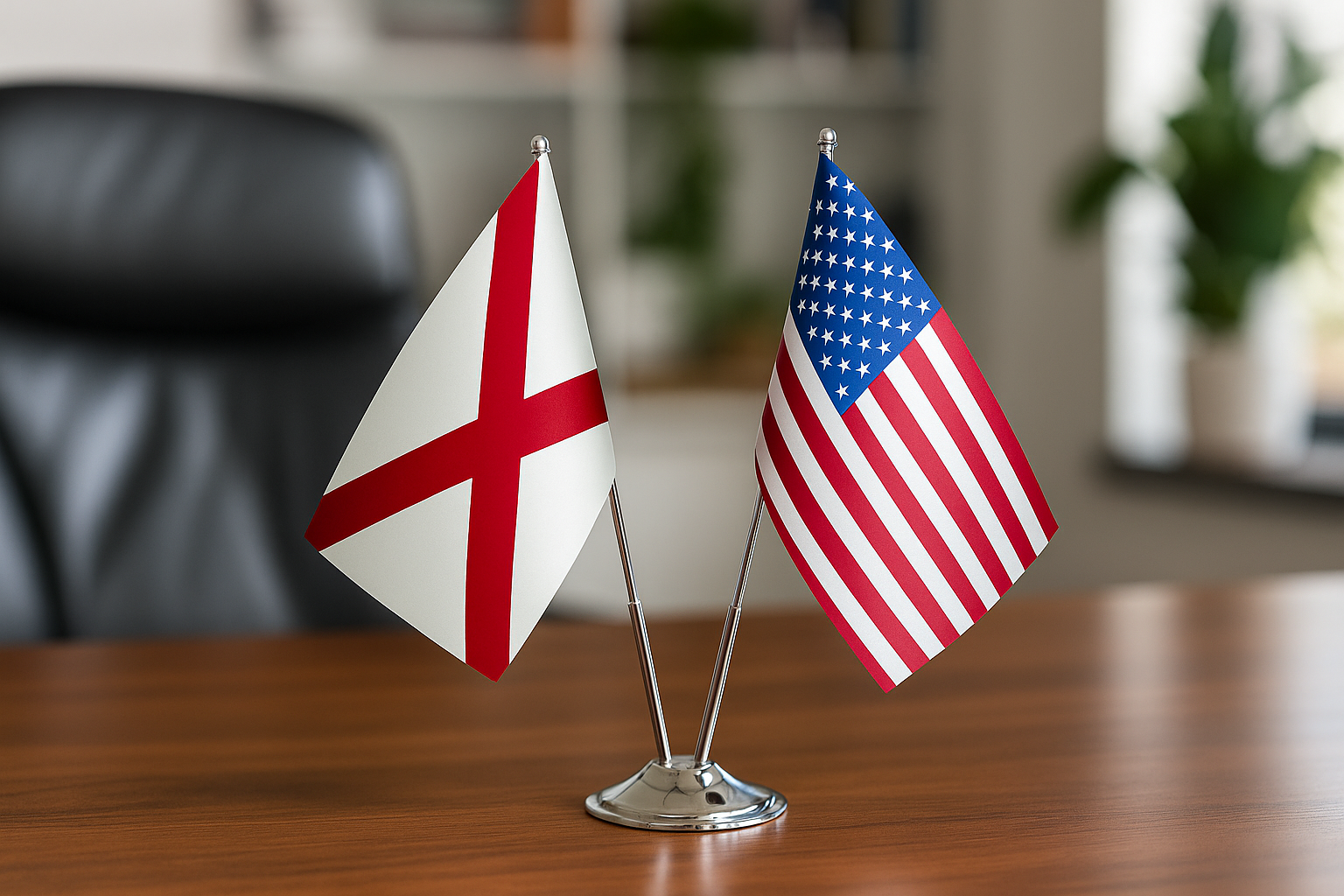
Indoor lobby sets follow a simpler count: one set per reception area, one set per boardroom used for client-facing meetings, and one set per executive suite if protocol requires it. A set typically includes the US flag, the state flag, and the company flag — three flags per location is the baseline.
Layout and Display Strategies That Work
Corporate flag placement follows both aesthetic best practices and, for US and state flags, the requirements of the US Flag Code (4 USC §§ 1-10). Getting layout right multiplies brand impact; getting protocol wrong creates legal and reputational risk.
 Under the US Flag Code, when the American flag is displayed alongside corporate or state flags outdoors, it must be flown at the same height or higher, and no other flag should be placed to its right (the flag's own right, which is the viewer's left). For a standard three-pole entrance display — the most common corporate configuration — the US flag occupies the center pole, the state flag goes to its left, and the corporate flag to its right from the viewer's perspective. This arrangement is legally compliant and visually balanced. The Logo Printed Pole Flag is designed with header reinforcement and brass grommets to mount cleanly on standard commercial flagpoles ranging from 15 ft to 40 ft (4.6 m to 12.2 m), which covers the majority of corporate entrance configurations. For larger campuses with more than three poles, the US flag should still occupy the position of honor — center of the row when the total count is odd, or the far left of the row when even — with corporate and state flags flanking symmetrically.
For trade show layouts, feather flags placed 8–10 ft (2.4–3.0 m) apart at the front corners of a booth create a branded visual frame visible from 50 ft (15 m) away across a convention floor. At outdoor events, ground-spike bases allow rapid deployment on grass or packed earth; for concrete or hard flooring, cross-base or water-weight bases are the correct hardware. Always specify your venue surface type when ordering so the manufacturer can recommend compatible base hardware.
For guidance on outdoor-specific display strategies — particularly for real estate developments, retail parks, and multi-building campuses — the article on outdoor branded pole flags for real estate and leasing offices covers layout strategies and wind rating considerations in depth, and the principles translate directly to corporate campus deployments.
Budget Planning for a Corporate Flag Program
Corporate flag program budgets are driven by four variables: flag format and size, print complexity, total quantity, and hardware requirements. Understanding each variable lets you build a defensible budget line item rather than guessing.
Flag format and size have the largest impact on unit cost. Larger flags require more fabric and longer print runs; feather and teardrop shapes use specialized cutting and finishing that differs from rectangular pole flags. Print complexity matters because a single-color logo costs less to produce than a full-color photographic print — but for most corporate programs, full-color dye sublimation printing is the right specification because it produces the sharpest logo reproduction and lasts longer than screen printing on outdoor polyester.
Quantity is the most powerful lever in your budget. Most flag manufacturers structure pricing in break-point tiers — the cost per unit drops meaningfully as you cross quantity thresholds. Programs covering 10 or more locations almost always justify the math of ordering one program's worth of flags plus a full set of spares in a single purchase order, simply because the per-unit savings at higher quantities offset the carrying cost of the inventory.
Hardware — flagpoles, bases, halyard, and snap hooks — is often the largest line item for first-time deployments and the smallest for repeat orders. Budget hardware separately from flags, and plan for it to last 10–15 years with proper maintenance. Amortized across that lifespan, hardware is rarely the place to cut costs.

Corporate Flags Collection
Every flag format a corporate program needs — from logo outdoor pole flags to indoor display sets — in one place, with bulk pricing available for multi-location deployments.
Browse Collection →When to Place Your Order: Production and Delivery Timelines
The single most common mistake in corporate flag programs is underestimating lead time. Custom flags — especially full-color dye-sublimation prints on large formats — require 7 to 21 business days in production before they ship, and that window extends to 4 to 6 weeks during peak seasons (Q4 holiday period, spring trade show season, and the weeks surrounding major sporting events).
For program launches tied to a specific date — a grand opening, a rebranding rollout, a trade show — work backward from your must-have-in-hand date and add a buffer of at least 5 business days for shipping and internal receiving. If your program involves multiple locations receiving flags simultaneously, add another 3 to 5 business days for logistics coordination. A corporate rollout hitting 50 locations on the same Monday requires more lead time than a single headquarters installation.
Artwork submission is the most common source of delay. Flags print best from vector files (AI, EPS, or SVG format) with all fonts outlined and colors specified in Pantone (PMS) values matched to your brand standards. Submitting a low-resolution raster logo or a PDF without embedded fonts adds 2 to 5 business days to the proofing cycle while the artwork team requests revisions. Have your brand assets ready before you place the order, not after.
For ongoing programs with multiple replacement cycles per year, the most efficient approach is a standing order agreement: set a reorder schedule at the beginning of each fiscal year, specify quantities by location, and have flags produced and held for scheduled shipment. This eliminates rush fees, ensures consistent quality across batches, and allows you to plan flag inventory as a predictable operating expense rather than an emergency procurement.
Maintaining Brand Consistency Across Locations
Brand consistency is the core value proposition of a corporate flag program — if your logo looks different at your Dallas office than it does at your Seattle office, the program undermines the brand instead of reinforcing it. Consistency across locations requires three things: a locked artwork file, a single approved manufacturer, and a documented flag specification sheet.
Your flag specification sheet should record: flag dimensions (width × height in both feet and centimeters), fabric weight and material, print method, Pantone color values for every element of your logo, header and grommet specifications, and pole diameter compatibility. Share this document with your manufacturer and require that every production run be matched against it. Request a physical proof or a calibrated digital proof before approving any new batch, especially after a rebranding event or a change of supplier.
For programs that include branded promotional items alongside flags — such as employee onboarding kits or trade show giveaway bundles — maintaining Pantone consistency across substrates (polyester flags, printed paper, molded plastic) is challenging because each material absorbs color differently. The article on corporate welcome kits and branded promotional bundles covers cross-material color consistency in practical detail if your program extends beyond flags alone.
Outdoor flags fade at different rates depending on their position — south-facing flags in high-UV climates fade faster than north-facing flags in shaded locations. Build a rotation inspection schedule into your program: a visual check every 90 days, with replacement triggered when fading is visible at 15 ft (4.5 m) under normal daylight. Consistent replacement timing across all locations keeps the program looking uniform, which is the entire point.
What is a corporate flag program? +
What flag types are most common in corporate programs? +
How long do outdoor corporate flags last? +
How should corporate flags be displayed with the US flag? +
What artwork format is required for ordering custom corporate flags? +
How far in advance should I order flags for a corporate program launch? +
What factors drive the cost of a corporate flag program? +
Is bulk pricing available for corporate flag programs covering multiple locations? +
Building a corporate flag program that performs well over years — not just at launch — comes down to specifying the right products, ordering the right quantities with spares included, respecting US Flag Code display protocol, and locking in a reliable production and replacement schedule. Start by browsing the full Corporate Flags collection to identify the flag formats that match your venues, then explore the Logo Printed Outdoor Pole Flags collection for outdoor entrance and campus applications. For brands deploying vertical logo flags at events and retail activations, the guide to vertical logo pole flags for brands covers format selection and placement in detail. Bulk pricing is available for corporate orders — contact the Asya Bayrak team to discuss a standing program, multi-location pricing, or a custom specification sheet for your brand.


